
By Hafiz Waleed | Aspire Digital News
April 8, 2026
Pakistan Enters a New Era of High-Tech Development
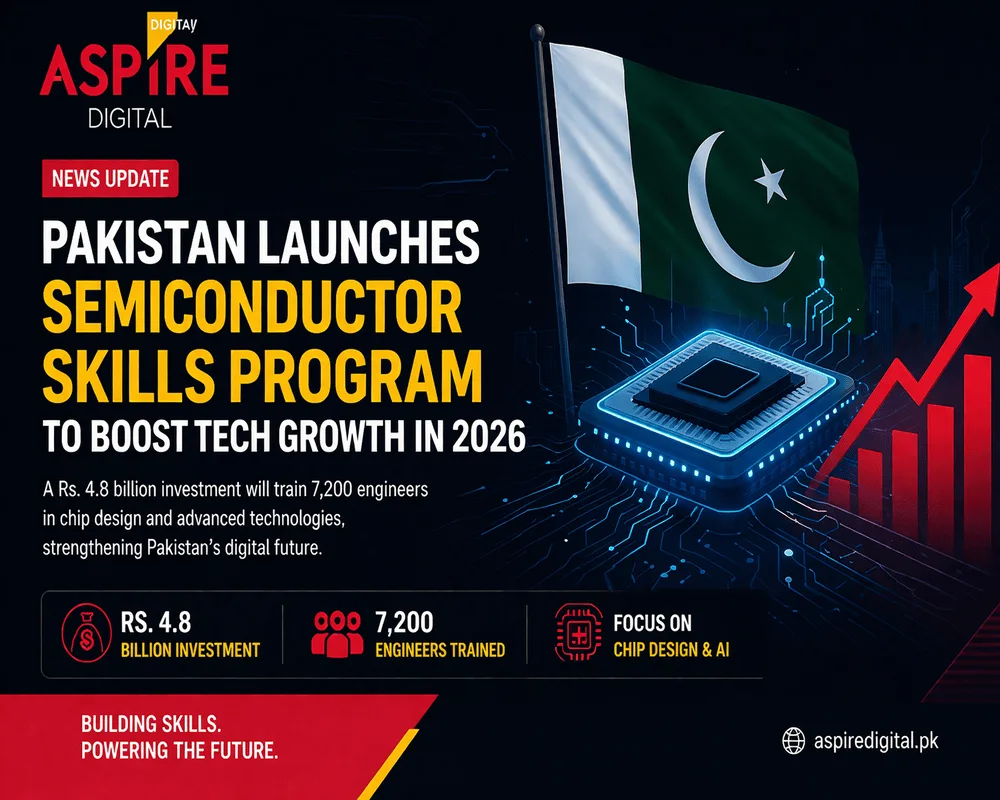
Pakistan has officially taken a significant step toward strengthening its digital and technological future by launching a semiconductor skills training program.
This initiative reflects the country’s growing focus on advanced technologies such as artificial intelligence (AI), chip design, and high-performance computing. With the global tech industry evolving rapidly, Pakistan is positioning itself to compete in the next wave of innovation.
In recent years, the demand for skilled professionals in semiconductor and AI fields has increased worldwide. Countries like United States and China have already made massive investments in this sector, and now Pakistan is joining this global shift.
This development also highlights how digital transformation is becoming essential for businesses. Learn more about its impact here:
https://aspiredigital.pk/what-is-seo-rank-business-google-pakistan/
Major Investment and Skill Development Goals
Under this program:
- The government is investing approximately Rs. 4.8 billion
- Around 7,200 engineers and professionals will be trained
- Focus will be on semiconductor design, chip manufacturing, and advanced technologies
This large-scale initiative aims to bridge the skills gap in Pakistan’s tech industry and prepare the youth for high paying, future-oriented careers.
According to reports, this program will not only create job opportunities but also enhance Pakistan’s reputation in the global tech ecosystem.
https://propakistani.pk/2026/04/07/pakistan-invests-rs-4-8-billion-to-build-semiconductor-workforce/
Global Demand for Semiconductor and AI Skills
The semiconductor industry is one of the fastest-growing sectors in the world. From smartphones to AI systems, chips power nearly all modern technologies.
With the rise of AI, the demand for chip engineers and hardware experts has increased dramatically. Governments and tech giants are investing heavily in this field to ensure technological independence and innovation.
AI is also transforming the workforce and business landscape globally. Read more here:
https://aspiredigital.pk/news/ai-jobs-2026/
Impact on Digital Marketing and Business Growth
Although this program focuses on engineering and technology, its indirect impact on the digital marketing industry is significant.
Key impacts include:
- Increased use of AI-driven marketing tools
- Better automation in advertising campaigns
- Growth of data-driven marketing strategies
- More skilled professionals entering the digital industry
As Pakistan becomes more technologically advanced, businesses will have access to better tools, faster internet, and more skilled talent resulting in improved digital marketing performance.
To understand the basics of digital growth and SEO, visit:
https://aspiredigital.pk/what-is-seo/
Aspire Digital Expert Insight
At Aspire Digital, we believe this initiative is a strong indicator of where Pakistan’s future is heading.
- The future of marketing is heavily dependent on AI and automation
- Businesses that adapt early will gain a competitive advantage
- Skilled professionals will drive innovation and digital growth
This program also shows that Pakistan is ready to compete globally in technology, which will directly benefit startups, agencies, and enterprises.
Learn more about our services:
https://aspiredigital.pk/
Why This News Matters for Businesses
This development is not just about education it has a broader impact:
- It will create a tech-driven economy
- Increase innovation and entrepreneurship opportunities
- Strengthen Pakistan’s position in global digital markets
- Improve job opportunities in AI and tech sectors
For businesses, this means a future where digital marketing, AI tools, and automation will play a central role in growth strategies.
Conclusion
Pakistan’s semiconductor skills training program marks a major milestone in the country’s journey toward becoming a technology-driven economy.
By investing in advanced skills and future technologies, Pakistan is preparing its workforce for the next generation of innovation.
Businesses and professionals who adapt to these changes early will be the ones who lead in the future.


